If you need immediate assistance, please contact us at+8617773160488sales@evernickel.com
If you need immediate assistance, please contact us at+8617773160488sales@evernickel.com
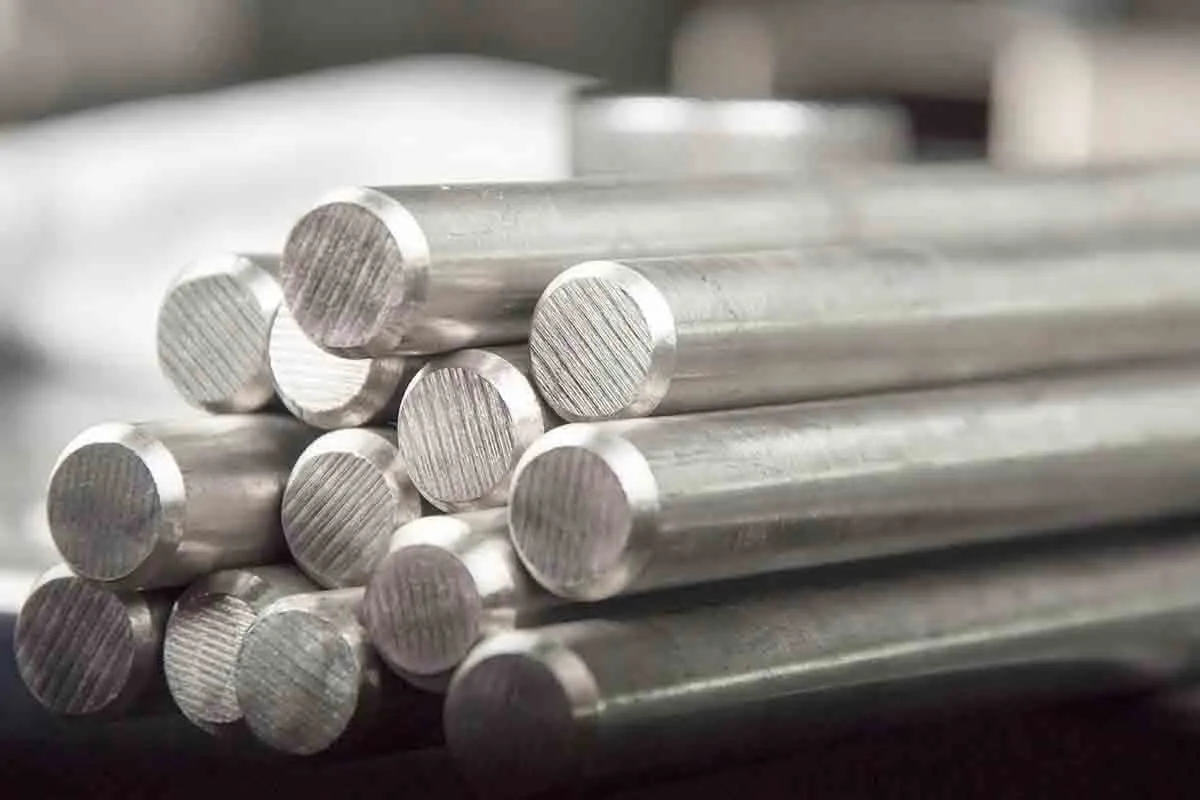
UNS N04400
Alloy 400
W.Nr. 2.4360
ASTM B164
| Material | Ni | C | Mn | Fe | S | Si | Cu |
|---|---|---|---|---|---|---|---|
| N04400 | 63.0 min | 0.30 max | 2.00 max | 2.50 max | 0.024 max | 0.50 max | 28.0-34.0 |
| Material | Tensile strength | Yield strength 0,2 | Elongation | Hardness HB30 |
|---|---|---|---|---|
| N04400 | 517-65 N/mm² | 172-345 N/mm² | 35-60% | 110-215 |
Heating is commonly performed processes in the treatment of Alloy 400 to achieve a specific temperature range for subsequent processes like welding, hot forming, or stress relieving, improve material ductility, reduce residual stresses, and facilitate further fabrication. Alloy 400 will remain bright and free from discoloration when heated and cooled in a reducing atmosphere or quenched in an alcohol-water solution. The alloy will form an adherent oxide film if allowed to cool in air after heating.
Pickling is a chemical process, typically performed after welding, hot forming, or when the material's surface has become contaminated, to remove surface contaminants, scale, and oxide layers from Monel 400 and produce bright, clean surfaces. Pickling involves immersing the material in an acid solution to dissolve the unwanted layers. Commonly used acids include a mixture of nitric and hydrofluoric acids or a mixture of nitric and hydrochloric acids. As for immersion time, it depends on the severity of surface contaminants and the desired level of cleaning.
The resistance to hot deformation of Alloy 400 is softer than many steels, it can be be hot-formed into almost any shape. The recommended hot-forming temperature range for alloy 400 is 1200°F to 2150°F, in no case should the alloy be heated above 2150°F. It is important to note that prolonged soaking at hot-working temperatures is detrimental. If a delay occurs during processing, the furnace should be cut back to 1900°F and not brought to temperature until operations are resumed. For heavy reductions, recommended metal temperature is 1700° to 2150°F. Light reductions may be taken down to 1200°F. Working at the lower temperatures produces higher mechanical properties and smaller grain size.
Alloy 400 is a ductile alloy that also can be cold formed to create various shapes and components. Cold forming processes are typically used when complex shapes or fine details are required without the need for high temperatures.





 Language
 English
 Español
 русский язык
 Italiano
 اللغة العربية