If you need immediate assistance, please contact us at+8617773160488sales@evernickel.com
If you need immediate assistance, please contact us at+8617773160488sales@evernickel.com
Alloy 800H
800HT®
UNS N08810 & N08811
W.Nr. 1.4958 & 1.4959
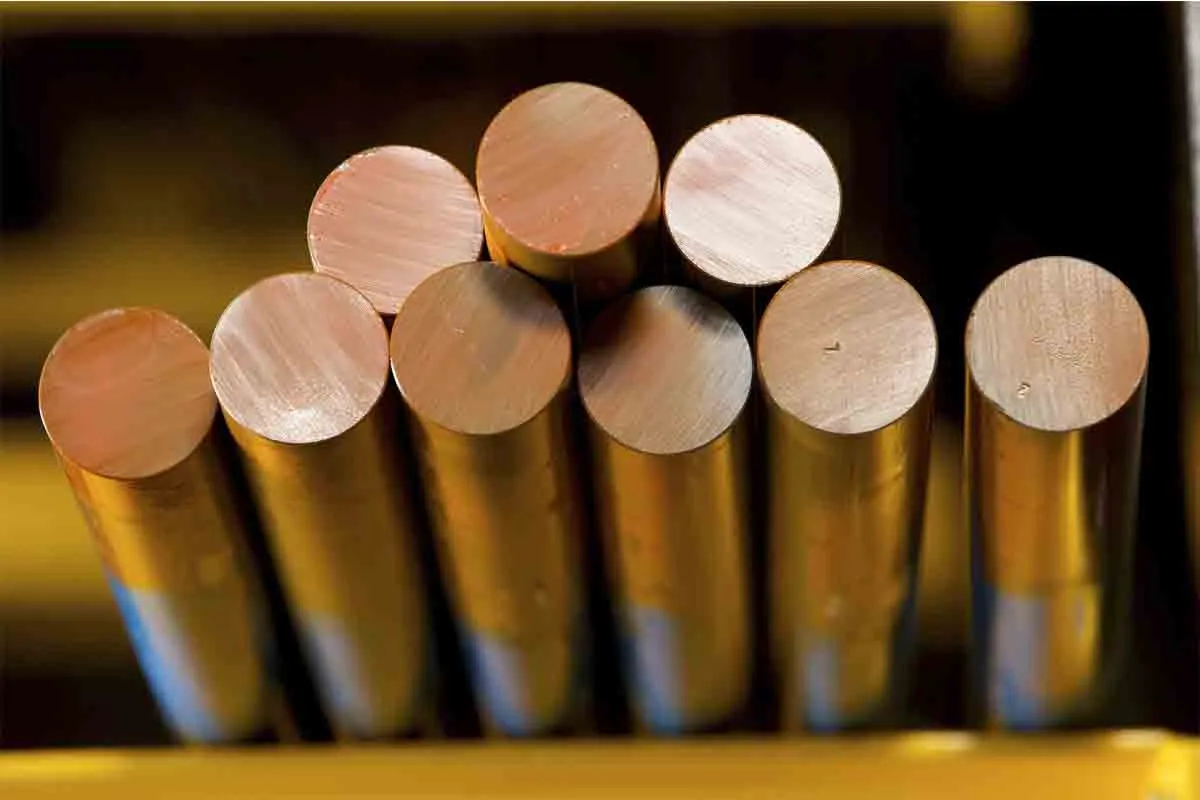
Industries and Applications
Alloy 800H/800HT® is frequently used in applications that involve long-term exposure to elevated temperatures where resistance to oxidation, carburization and other types of elevated temperature corrosion is required. Heat treatment and power generation are two common industries where alloy 800 H/HT® is used. Typical applications include superheater and reheater tubing, headers, pigtails, outlet manifolds and sheathing for heating elements. Pressure vessels and vessel components constructed from 800H and 800HT® are approved under the ASME Boiler and Pressure Vessel Code, Section VIII, Division 1.
Resistance to Corrosion
The high nickel and chromium contents in alloy 800H/800HT® results in excellent resistance to oxidation, carburization and sulfidation. The high nickel content also increases the resistance to nitriding, although resistance could be lower than other alloys containing a higher percentage of nickel, such as alloy 600. Alloy 800H/800HT® has excellent resistance to nitric acid at concentrations up to 70% largely due to the chromium content. The alloy has good resistance to organic media like formic, acetic and propionic acids.
Fabrication and Heat Treatment
Hot-working temperatures should be between 1600°F and 2200°F with heavy forming to be performed at temperatures above 1850°F. No forming should be performed between 1200°F and 1600°F and preheating of tools and dies to 500°F is suggested to avoid chill. Cooling after hot working should be as quick as possible, avoiding extensive time at temperatures between 1000°F and 1400°F. Cold working should be performed on material in the annealed condition. Depending on the amount of strain induced by cold work during fabrication, an additional stress relieving or annealing heat treatment may be necessary. Because excessive grain growth can negatively affect mechanical properties, care must be taken in selecting an annealing temperature and time at temperature for the process. If material is to be deformed more than 20% and a final anneal is desired, fine-grain material should be considered for the starting stock. Stress relief is performed between 1000°F and 1600°F and should be at temperature for 1 hour per inch of material or for a minimum of 1½ hours at 1600°F, whichever is greater. Recrystallization anneal is achieved at temperatures between 2100°F and 2200°F.
|
Chemical Composition Limits |
|||||||
|
Weight % |
Ni |
Cr |
Fe |
C |
Al |
Ti |
Al+Ti |
|
Alloy 800 |
30-35 |
19-23 |
39.5 min |
0.10 max |
0.15-0.60 |
0.15-0.60 |
0.30-1.20 |
|
Alloy 800H |
30-35 |
19-23 |
39.5 |
0.05-0.10 |
0.15-0.60 |
0.15-0.60 |
0.30-1.20 |
|
Alloy 800HT |
30-35 |
19-23 |
39.5 |
0.06-0.10 |
0.25-0.60 |
0.25-0.60 |
0.85-1.20 |
|
ASTM Grain Size - Alloy 800 is not specified, Alloy 800H is 5 or coarser, Alloy 800HT is 5 or coarser. |
|||||||
|
Temper |
800 |
800H/HT |
||
|
Tensile Rm |
77.8 |
ksi (min) |
65 |
ksi (min) |
|
Tensile Rm |
536 |
MPa (min) |
448 |
MPa (min) |
|
R.p. 0.2% Yield |
22 |
ksi (min) |
25 |
ksi (min) |
|
R.p. 0.2% Yield |
150 |
MPa (min) |
172 |
MPa (min) |
|
Elongation (2” or 4D gl) |
20 |
% (min) |
20 |
% (min) |
|
Specific Heat (0-100°C) |
460 |
J.kg-1.°K-1 |
|
Thermal Conductivity |
11.5 |
W.m -1.°K-1 |
|
Thermal Expansion |
14.4 |
μm/μm/°C |
|
Modulus Elasticity |
208 |
GPa |
|
Electrical Resistivity |
9.89 |
Ohm-cm |
|
Density |
7.94 |
g/cm3 |





 Language
 English
 Español
 русский язык
 Italiano
 اللغة العربية