If you need immediate assistance, please contact us at+8617773160488sales@evernickel.com
If you need immediate assistance, please contact us at+8617773160488sales@evernickel.com
W.Nr. 2.4816
UNS N06600
AWS 010
AMS 5665
AMS 5687
ASTM B166
BS 3075 NA 14
BS 3076 NA 14
DTD 328A
QQ-W-390
Industries and Applications
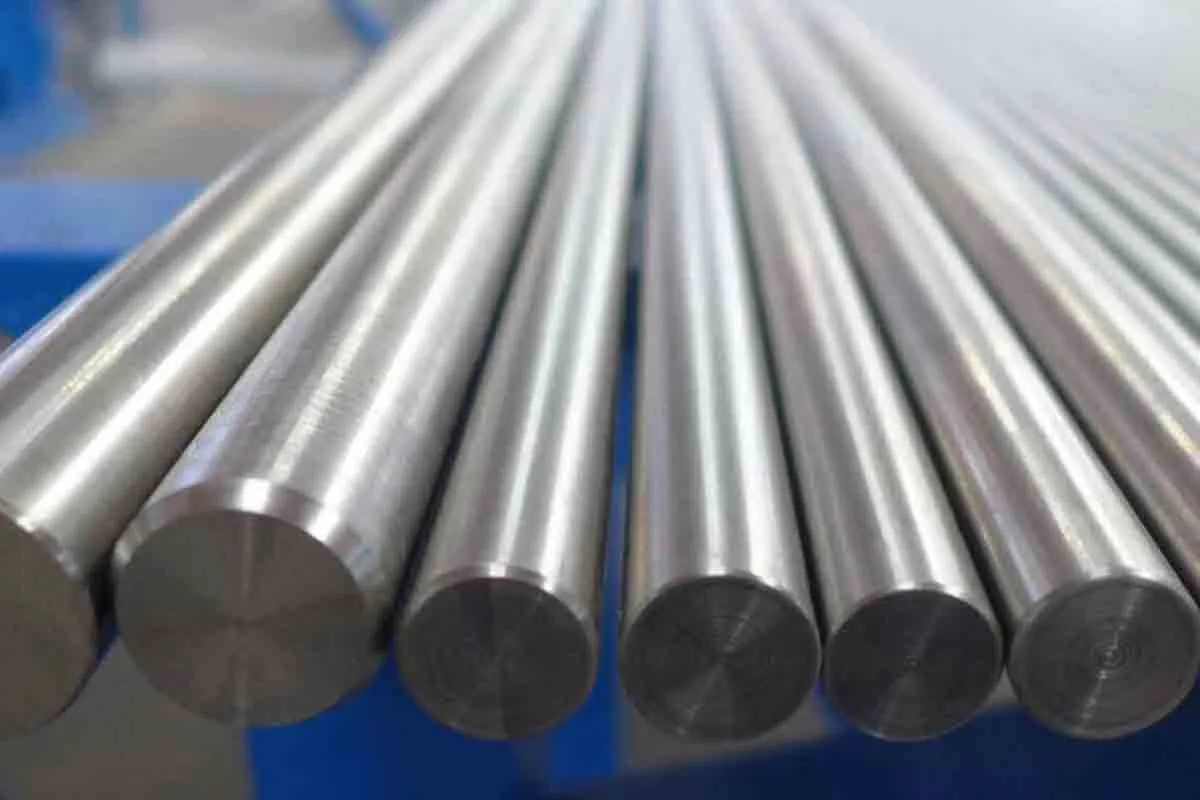
Alloy 600's unique characteristics make it highly valuable across various sectors. In the chemical process industry, it is used for heaters, condensers, and trays. The heat-treat industry employs it in muffle furnaces, retorts, baskets, and furnace fixtures. Within the aerospace sector, it is integral to exhaust liners, turbine seals, and airframe components. Due to its excellent corrosion resistance in high purity water, it is also prevalent in the nuclear industry.
Corrosion Resistance
Containing a minimum of 72% nickel, Alloy 600 is resistant to many organic and inorganic compounds and offers robust corrosion resistance in reducing environments. Its high nickel content reduces the risk of stress corrosion cracking when annealed and enhances resistance to carburizing, nitriding, and thermal fatigue, all while maintaining its ductility due to its austenitic structure. The alloy's increased chromium content provides resistance to sulfur compounds at high temperatures and oxidizing conditions in corrosive environments. Exceptionally, Alloy 600 maintains good resistance in strong solutions of magnesium chloride at elevated temperatures, with typical corrosion rates around 1 mpy. For severe service conditions, it is recommended that the material be fully stress relieved prior to use.
Fabrication and Heat Treatment
Alloy 600 can be formed both hot and cold using standard processes. Hot working should occur between 1600°F and 2250°F, with avoidance of the range between 1200°F and 1600°F due to reduced ductility. Its rate of work hardening is slower than that of 304 stainless steel but faster than mild steel. Welding can be performed using shielded metal-arc welding with AWS ENiCrFe-3 electrode, and AWS ERNiCr-3 filler metal is suitable for TIG and MIG welding. Machining Alloy 600 requires heavy-duty equipment, sharp tools, and proper cutting fluids, and it is slightly more machinable than 304 stainless steel. Annealing can be done at 1850°F for 15 minutes to achieve a fine grain structure, which enhances the material's corrosion resistance and mechanical properties.
The chemical composition of Inconel® 600 is indicated in the table below:
|
Element |
Min % |
Max % |
|
Ni |
72.00 |
– |
|
Cr |
14.00 |
17.00 |
|
Fe |
6.00 |
10.00 |
|
Mn |
– |
1.00 |
|
C |
– |
0.10 |
|
Cu |
– |
0.50 |
|
Si |
– |
0.50 |
|
S |
– |
0.015 |
|
P |
– |
0.04 |
|
Co |
– |
1.00 |
|
Nb/Cb |
– |
1.00 |
|
Ti |
– |
0.50 |
|
Ta |
– |
0.05 |
|
AI |
– |
0.35 |
Inconel® 600 density, melting point, coefficient of expansion, modulus of rigidity, and elasticity is indicated in the table below:
|
Density |
Melting Point |
Coefficient of Expansion |
Modulus of Rigidity |
Modulus of Elasticity |
|
8.47 g/cm³ |
1413 °C |
13.3 μm/m °C (20 – 100 °C) |
75.6 kN/mm² |
206 kN/mm² |
|
0.306 lb/in³ |
2575 °F |
7.4 x 10⁻⁶ in/in °F (70 – 212 °F) |
10965 ksi |
29878 ksi |
The typical heat treatment of Inconel® 600:
|
Condition as supplied by AWI |
Type |
Temperature |
Time |
Cooling |
|
Annealed or Spring Temper |
Stress Relieve |
460 °C (860 °F) |
1hr |
Air |
The typical mechanical properties of Inconel® 600:
|
Annealed |
|
|
|
Approx. tensile strength |
<900 N/mm² |
<131 ksi |
|
Approx. operating temperature depending on load** and environment |
-200 to +1000 °C |
-330 to +1830 °F |
|
Spring Temper |
|
|
|
Approx. tensile strength |
900 – 1450 N/mm² |
131 – 210 ksi |
|
Approx. operating temperature depending on load** and environment |
-200 to +1000 °C |
-330 to +1830 °F |
Slight magnetism may occur below 120 °C (184 °F)





 Language
 English
 Español
 русский язык
 Italiano
 اللغة العربية